Miami is too big and too spread out to see in one go, and too hot in most months to try. The answer is to take it a neighbourhood at a time. These four, each with a different history and a different face, give a fair picture of the city: the Art Deco district on South Beach, Little Havana, Wynwood and Vizcaya on Biscayne Bay.
South Beach and the Art Deco district
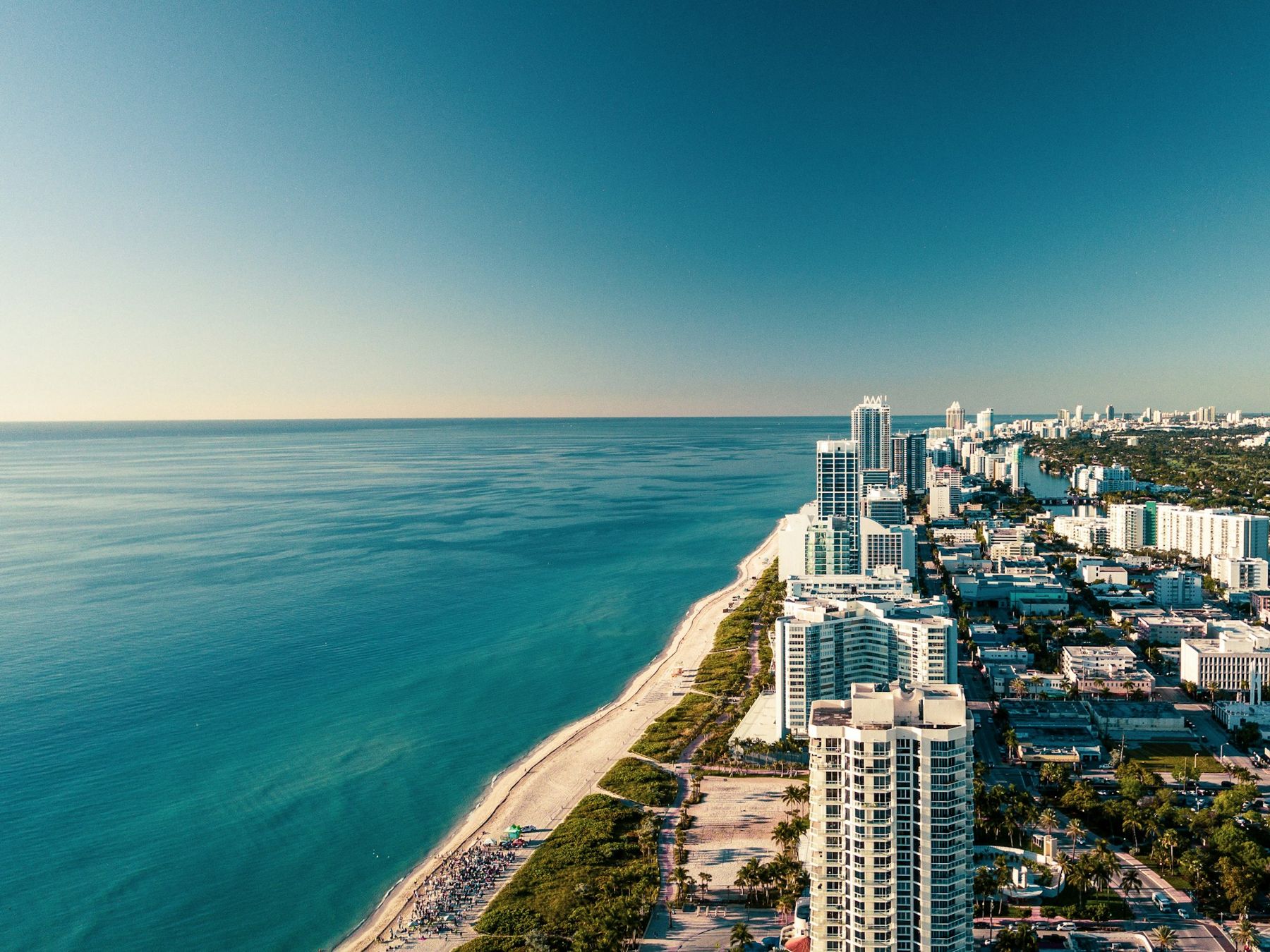
Miami Beach is a barrier island across Biscayne Bay from the mainland, and its southern end holds one of the largest collections of Art Deco buildings anywhere. Most were built in the 1930s and early 1940s as small hotels and apartment houses for middle-class holidaymakers: low, white or pastel, with rounded corners, porthole windows, racing stripes and neon. By the 1970s many were run down and some were threatened with demolition. A preservation campaign won the district a place on the National Register of Historic Places in 1979, and the buildings were gradually restored.
Walk Ocean Drive early in the morning, before the heat and the crowds, when the light is soft on the facades and the beach across the road is nearly empty. Then head a block or two inland, to Collins and Washington Avenues, where the buildings are just as interesting and the streets quieter. Look for the variations: the Mediterranean Revival houses with tile roofs, and the later Miami Modern style of the 1950s, with its swooping canopies.
The district is easy to read once you know what to look for. Deco buildings are usually symmetrical, with a raised central tower or fin, three-part facades and decorative bands above the windows called eyebrows, which shade the glass from the sun. Terrazzo floors show through open lobby doors. At night, the neon outlines come on, and Ocean Drive becomes a different street altogether, louder and much busier. Visit both ways if you can, but do the serious looking by day.
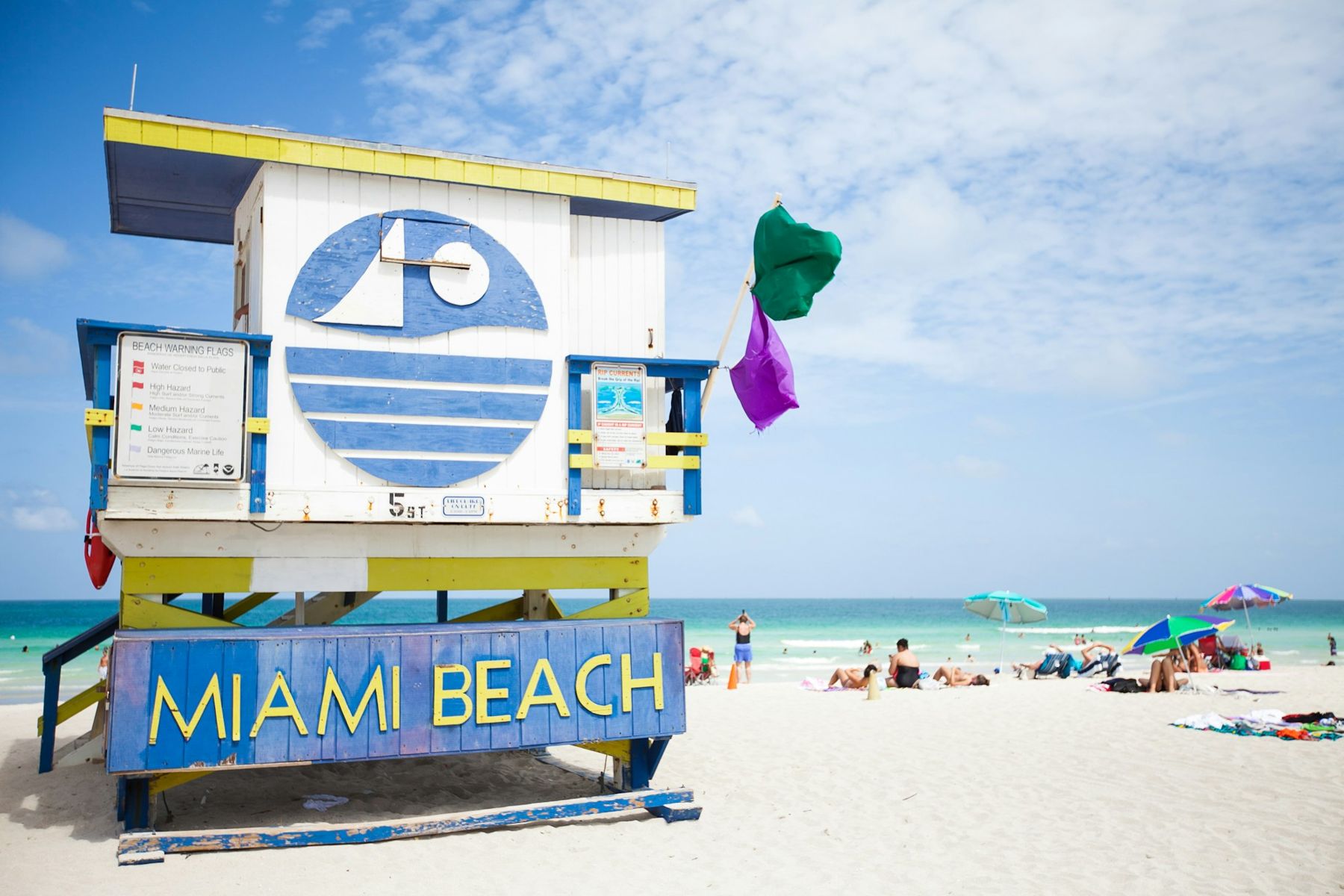
The beach itself is wide and busy, with lifeguard stands in bold colours and shapes. Swim near them and check the flags.
Little Havana and Calle Ocho
West of downtown, across the Miami River, Little Havana became the centre of Cuban Miami after the 1959 revolution, when exiles arrived in large numbers. The neighbourhood has since taken in people from across Latin America, but its main street, SW 8th Street, known as Calle Ocho, keeps a strongly Cuban character.
Start at Máximo Gómez Park, where older men play dominoes under a shaded pavilion. Watch quietly and do not photograph people without asking. Nearby, Cuban Memorial Boulevard holds monuments to the island's history, including a memorial to the Bay of Pigs invasion of 1961. Along Calle Ocho you will find walk-up coffee windows, cigar rollers, murals and a restored 1920s cinema, the Tower Theater.
Food is a large part of the visit. Stand at a coffee window and order a cafecito, a small, very sweet shot of espresso, or a colada, the same thing served with tiny cups for sharing. Bakeries sell pastelitos filled with guava or meat, and lunch counters serve Cuban sandwiches pressed flat on the grill. None of this needs a reservation, and it is the easiest way into the neighbourhood's daily rhythm.
A large street festival takes over Calle Ocho each March, and a smaller cultural evening with music and art has long been held on the last Friday of the month. Check dates before you go.
Wynwood and the murals
North of downtown, Wynwood was a district of warehouses and garment factories until the 2000s, when developers and artists began covering its blank walls with murals. Today, nearly every surface in the central blocks carries large-scale painting, from portraits to abstract patterns, by artists from around the world. Many are repainted every year or two, so what you see changes.
The best way to see Wynwood is on foot, slowly, in the morning before the heat builds and the bars open. Most of the murals are on public streets and free to look at. The best-known walled garden of murals charges admission; check current prices and hours. Be respectful of the businesses and homes behind the walls, and of the artists' work: photography is welcome, but commercial shoots often need permission.
Around the murals, the old warehouses now hold galleries, studios, breweries and restaurants, and the district gets loud on weekend nights. A few blocks east, the Design District, once a furniture showroom quarter, has turned into a zone of luxury shops and public art. The two together show how fast this part of Miami has changed, and how quickly a neighbourhood's character can be painted over.
The best way to see Wynwood is on foot, slowly, in the morning before the heat builds and the bars open.
Vizcaya on Biscayne Bay
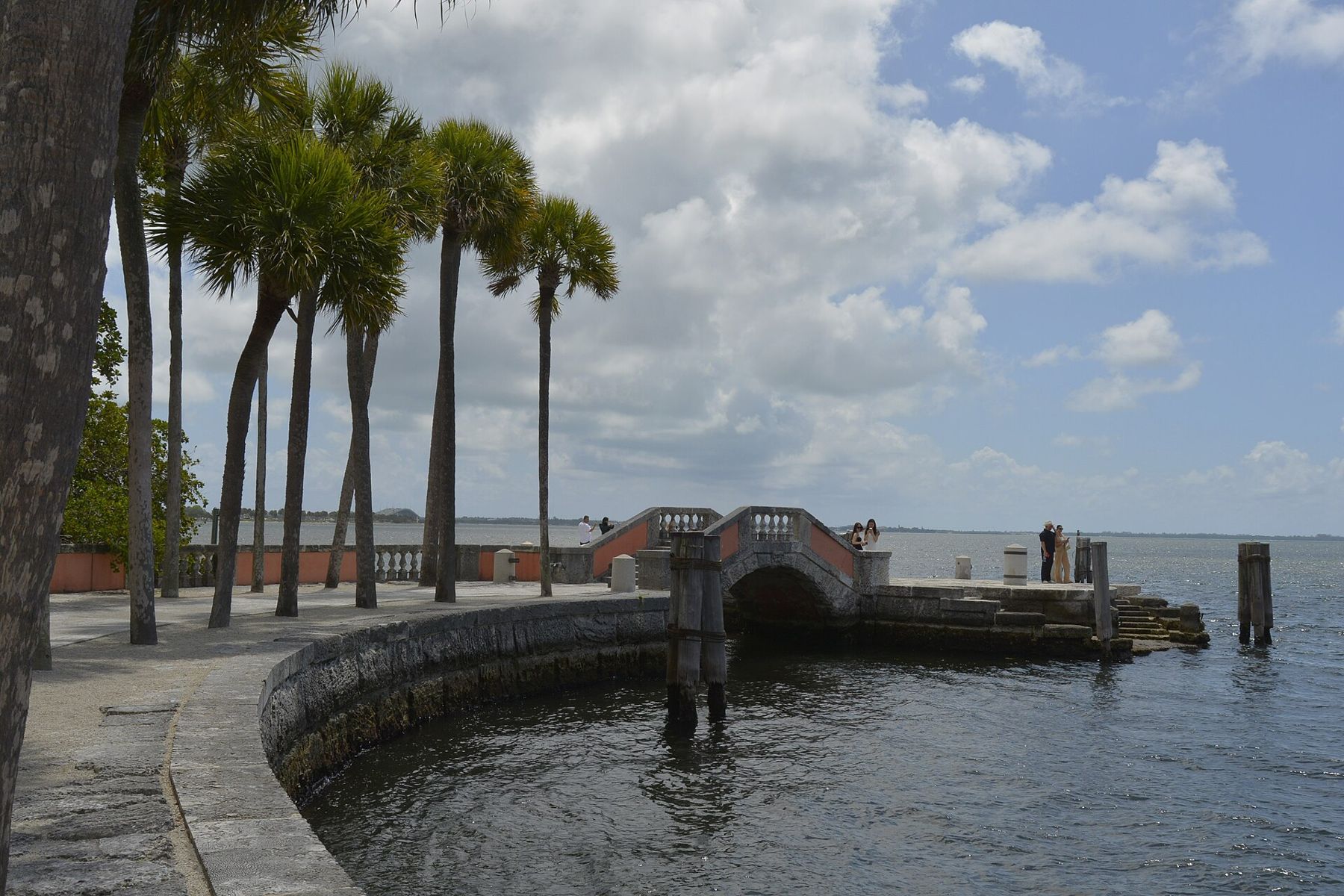
South of downtown, in Coconut Grove, Vizcaya Museum and Gardens is a reminder of the money that built early Miami. The house was built in the 1910s for James Deering, of the farm-machinery fortune, in the style of an Italian Renaissance villa, and the formal gardens were finished in the early 1920s. Inside, rooms are furnished with European antiques; outside, terraces, fountains and clipped hedges step down to the water.
On the bay stands a stone breakwater shaped like a barge, decorated with sculpture, which shelters the house from waves. Walk along the seawall for views across Biscayne Bay to Key Biscayne. Tickets and hours change, so check before you go. Vizcaya has its own Metrorail station, a short walk from the entrance.
Leave time for the gardens, which are the most memorable part. Paths lead between clipped hedges, past grottoes, statues and a mound with views over the parterres, and the native hammock beyond has been kept as a reminder of what the shoreline looked like before Deering arrived. The estate took heavy damage from hurricanes over the years, notably in 1926 and again in 1992, and its survival owes much to steady restoration.
Heat, getting around and timing
Miami is hot and humid for much of the year, with near-daily thunderstorms from late spring to autumn and hurricane season from June to November. Winter, December to April, is the most comfortable and the busiest. In any month, plan outdoor sightseeing for the morning and late afternoon, carry water and keep an umbrella handy.
- Metrorail runs from the airport through downtown to the south. Metromover, a free elevated loop, covers downtown and Brickell.
- Free local trolleys serve many neighbourhoods; buses cross to Miami Beach. Check current routes.
- Driving is possible but traffic is heavy and parking costly, especially on South Beach.
For a quieter Atlantic city an hour or so north, West Palm Beach is an easy add-on by train or car. If beaches are the main point, our guide to choosing a Florida coast compares the Atlantic with the Gulf.