Shiloh National Military Park lies in the rural southwest corner of Tennessee, a few miles from the Mississippi line, on the west bank of the Tennessee River. It is a landscape of oak woods, small fields, ravines and a bluff over the water, crossed by quiet roads and dotted with monuments. On 6 and 7 April 1862 it was the scene of a battle that changed how Americans understood the war they were fighting.
The battle, plainly told
In the spring of 1862, Union forces under Ulysses S. Grant had moved up the Tennessee River and camped around Pittsburg Landing, waiting for a second Union army under Don Carlos Buell to join them before advancing on the rail junction at Corinth, Mississippi. The Confederate commander in the west, Albert Sidney Johnston, decided to strike first. His army marched up from Corinth and, early on the morning of 6 April, attacked the Union camps near a small log meeting house called Shiloh Church.
The attack drove the Union troops back across fields and woods towards the river. Some Union units held a line along a sunken farm road for much of the day, in the area later called the Hornet's Nest, before they were surrounded and many were captured. In the afternoon Johnston was struck in the leg and bled to death, the highest-ranking officer on either side to die in the war. P. G. T. Beauregard took command and halted the attack at nightfall, with Grant's army pressed against the landing.
During the night Buell's army arrived and crossed the river, and more of Grant's troops came up. On 7 April the reinforced Union armies counterattacked and regained the ground lost the day before. By the afternoon the Confederates were withdrawing to Corinth.
Over the two days, more than twenty-three thousand men were killed, wounded, captured or missing, a toll that shocked both North and South. Many of the soldiers on both sides had never been in battle before. After Shiloh, few on either side still believed the war would be short.
Touring the park
Start at the visitor centre near Pittsburg Landing, where a film and exhibits set out the course of the battle. From there a numbered driving tour follows the fighting across the field, with stops at the reconstructed Shiloh Church, the Hornet's Nest and the sunken road, the Peach Orchard, the place where Johnston was mortally wounded, and the small pond that soldiers of both sides used for water and to bathe their wounds, known since as Bloody Pond. Allow at least half a day; a full day is better if you want to walk.
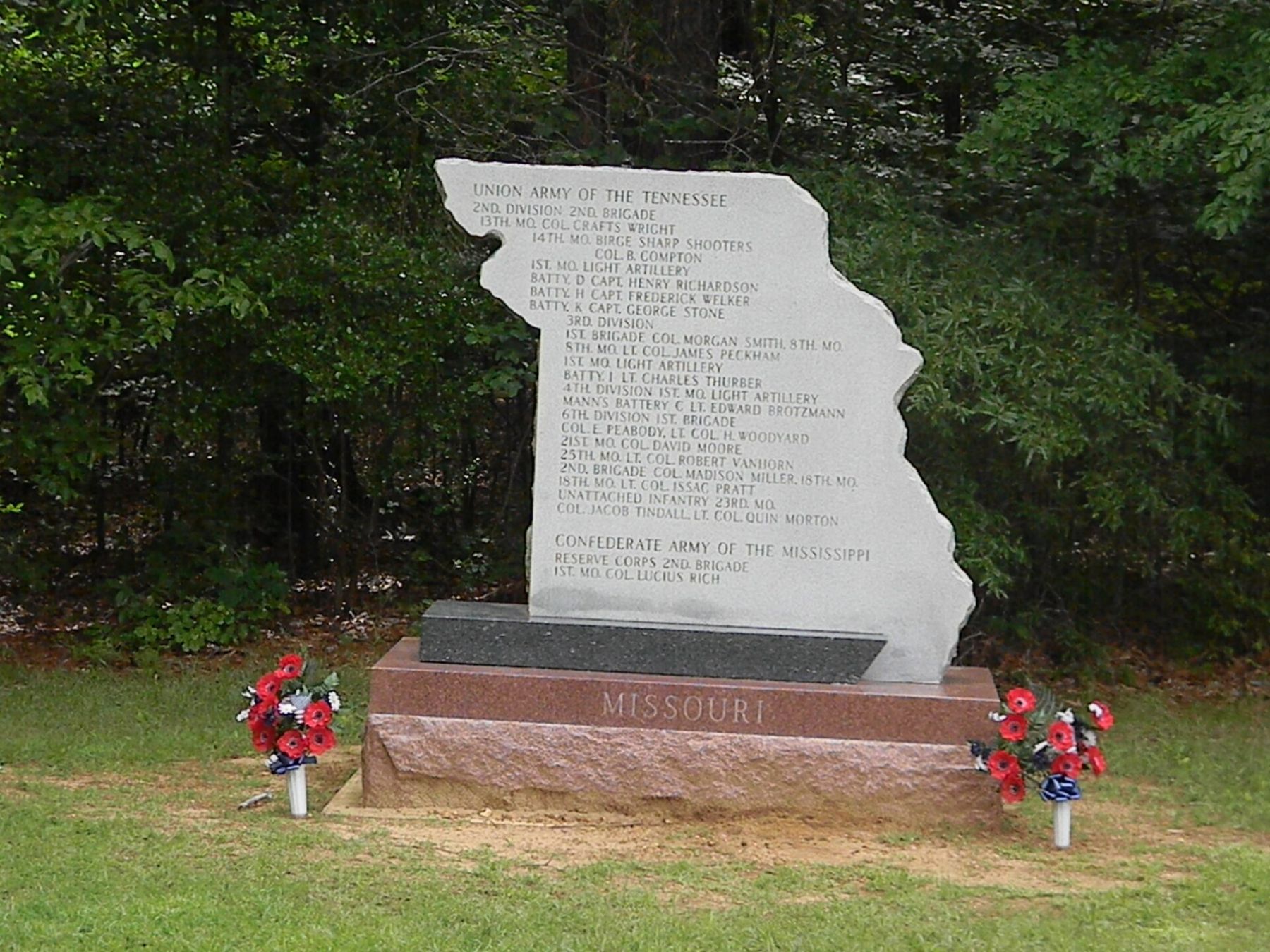
The park is full of monuments placed by the states whose soldiers fought here, and by veterans in the decades after the war. Many list the regiments and their commanders; some list the dead. Iron tablets mark where units stood at given hours, and a careful reader can follow the battle from them alone. The park was established in 1894, among the first battlefields to be protected by the federal government, partly at the urging of those veterans.
The national cemetery
Shiloh National Cemetery sits on the bluff above the landing, with rows of white headstones under old trees. Most of those buried here are Union soldiers, and a great many graves are marked only as unknown. Confederate dead were buried on the field, many in mass trenches, several of which are marked within the park. Walk the cemetery quietly. It is the plainest statement of what the battle cost.
The Indian mounds
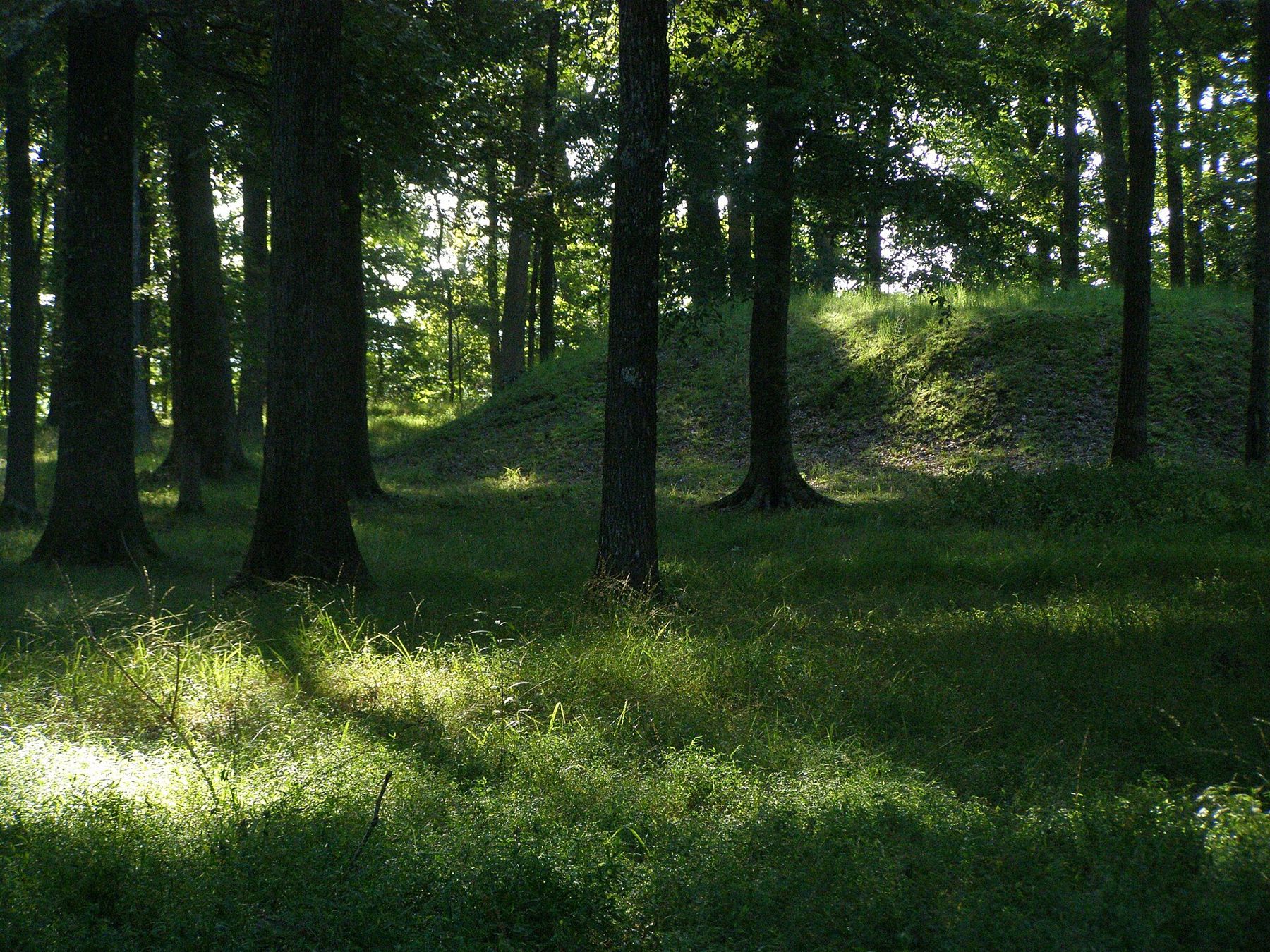
Long before the battle, the bluff above the river was the site of a town built by people of the Mississippian culture, roughly a thousand years ago and occupied for a few centuries. They raised earthen mounds, including a large flat-topped platform mound, and surrounded the settlement with a defensive wall. The Shiloh Indian Mounds site is within the park and is a National Historic Landmark. A short trail leads past the mounds to views over the river, and erosion of the bluff, which threatened parts of the site, has been the subject of long stabilisation work. These are places of significance to Native nations today; stay on the paths and do not climb the mounds.
Savannah, Adamsville and Pickwick Lake
Savannah, across the river and a short drive north, is the nearest town of any size. Grant made his headquarters there before the battle, in a house above the river that still stands as a private home. Adamsville, west of the park, has a museum in the former home of a county sheriff whose story was told in film. Neither is a reason to make the trip alone, but both fill an afternoon.
Upstream to the south, the Tennessee River is held back by Pickwick Landing Dam, a public power dam completed in the 1930s, forming Pickwick Lake, which spreads into Tennessee, Mississippi and Alabama. There is a state park on the lake with swimming, boating and fishing, and the dam's lock lets you watch river traffic pass through. In summer it is where the region goes to cool off.
Practical notes
Spring is the season that matches the battle, with dogwoods in flower and the woods coming into leaf; it is also the time of anniversary events, which can be busier. Autumn is mild and clear. Summer is hot, humid and buzzing, so bring repellent and water. The park has historically charged no entrance fee, but hours and programmes change, so check before you go. Mobile signal can be patchy, which is one more reason to carry the paper map the packing list recommends.
The corner of Tennessee is a long way from anywhere fast. Combine Shiloh with Memphis to the west, or with the Corinth part of the park, a short drive south into Mississippi, which explains the railroad junction both armies wanted. If you are collecting American history on a longer road trip, the very different story told at Dealey Plaza in Dallas is a day's drive southwest.